

Member review
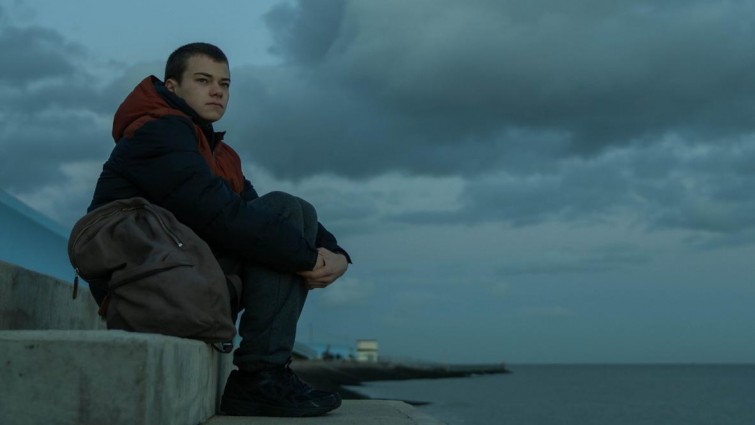
County Lines
British drama exploring the grooming of young people into criminal networks through the story of a 14-year-old.
Certificate
Duration90 mins
Review by
- Thomas, 17
- 1 reviews
10 Word Review-A powerful, but occasionally disconnected comment on child drug trafficking.
Best Moment-Having now been at the drug lord’s house for more than 24 hours, Tyler awkwardly watches as his new boss deals with an addict crashing at his house. Awkwardly sitting there awaiting another payment, Tyler suddenly becomes startled when the previously silent woman, who is noticeably emaciated and weak, emerges from the chair to desperately negotiate a deal with the drug lord. Exiting her chair, she kneels on the floor and enters a prayer position as she attempts to negotiate a better drug deal. Her prayer-like position of begging signifies the extent of her desperation and addiction by suggesting that she sees her drug lord as a fearful God-like figure, with her incredible desperation symbolising the powerlessness of those with drug addictions by emphasising how drugs cause people to lose control of their own emotions (this idea ties into the major anti-drug sentiment of the film). Begging him to give her more drugs without extra payment, the woman’s desperation and pain is merely met with dismissal and disagreement from the drug lord, who conveys his belief that money is necessary for better drugs so there is therefore no point in trying to argue a deal in a different manner. The use of a low angle when filming his countershot to her pain and anguish emphasises his immorality and the universal immorality of the drug trade in general by showing the callousness of those who distribute drugs and how they have no care for the actual consequences of their actions, something that is inherently selfish and wrong. After this countershot, another countershot is shown, this time of Tyler’s reaction, in which he quietly reacts and barely mutters a word. His unresponsive and reserved response signifies his own inner conflict of morality, highlighting his duality by suggesting that he has to put on a Jungian persona to shield his emotions, so that he can truly succeed in the drug trade. However, the genuine, yet quietly spoken compassion in his response emphasises his morality and foreshadows his eventual redemption, whilst also epitomising how the drug trade is ruled on a culture of fear and obligation. Following this scene, a brief interlude shows Tyler standing outside as he reads a map of drug pickup areas and also looks at his phone, anticipating calls due to his new job. Due to it being nighttime, the walkway in which he stands is notably dimly lit, with only a flash of light from lampposts through the middle of it. Almost in a religious sense, it signifies how he has a narrow pathway to redemption, yet the pathway is so narrow and so small that he will have to work hard to maintain his morality, with this scene also foreshadowing his eventual redemption of hope. In a more stylistic sense, this scene successfully provides a brief moment of calmness, which is juxtaposed against the extreme violence and deafening loudness of the following scene. Through this juxtaposition of tonality in scenes, the impact of the next scene is made all the more powerful as the contrast alarms the audience and makes them all the more invested. Abruptly after this moment of calmness, we return to Tyler sitting quietly in the room before the juxtaposition to alarm the audience truly begins with the drama in the other room. Practically asleep, Tyler is quickly awoken by the drug lord and the addict arguing loudly in the other room. As the argument and its pace quickly accelerates, Tyler begins to become more and more outwardly stressed, an indication that he has not yet been completely overwhelmed by his Jungian false persona. Eventually, the argument reaches a climactic moment of tragedy when the drug lord begins to hit and assault the woman. Worried and wanting to help her, Tyler dashes out into the hallway, seemingly to help her. However, instead, as shown by a series of countershots to the violent assault, he simply stands there and passively watches, with the internal conflict between his moral superego of guilt and his Id-fuelled willingness to keep up his persona epitomised by the somber and guilty expression on his face, symbolising his reluctance yet also tragic acceptance to acknowledge that he must finish what he started. The countershots serve as arguably the most damning criticism of county lines drug trafficking in the film because they suggest that being involved in such an immoral and life-threatening trade can damage one’s inner soul and force them into a state of trauma and endless pain by ensuring that they are ruled by their personas and Id-fuelled desires for greed. In terms of the assault itself, it is filmed in an incredibly violent and unhinged manner, yet also initially from a faraway shot to emphasise the current distance between Tyler and the true nature of the drug trade, and how he still has the choice to walk away. However, as the battering assault continues, the camera gradually zooms in until it closes in on the drug lord’s face, tragically symbolising how Tyler is ruled by his Id and desire for greed, hence why he is getting increasingly closer to the drug lord and increasingly important in the drug trade. The unhinged violence of the scene, including kicking and throwing down the stairs, emphasises the power of the film’s adherence to social realism conventions by epitomising how, in a Soviet montage manner, a series of powerful and realistic images can be used to both make the audience relate more to the story and learn a profound moral message, which in this case is that criminality and drugs only lead to pain and hardship, with this perepeteia in Tyler’s life symbolising the beginning of an eventually-averted tragic arc. Notably in this part of the scene, to foreshadow Tyler’s continuing chance for redemption, he is on a different floor from the drug lord when he witnesses this assault, thereby symbolising how his remaining distance from the drug trade leaves redemption open for him, as well as possibly representing how Tyler’s genuine personality is starkly different from the one that he falsely projects through his Jungian persona. As the assault ends, the camera zooms in on the drug lord as he orders Tyler to get him food immediately. The camera then cutaways to Tyler dashing through the street to find a takeaway. The numerous lights that he runs past in contrast to his mostly dark surroundings emphasise how he still has a chance to redeem himself and regain his morality, but that his own selfishness and desperation means that his chances of redemption are growing increasingly slim. The quick nature of his run also serves as a device to naturally build tension, with his tension-fuelled and unnaturally rapid dash down the long and winding street making us feel a more personal connection with him because the stress of the run clearly represents his stressful state of mind and insecurity over his internal struggle of morality due to the conflicted nature of whether to uphold his persona. Finally sprinting into the takeaway Chicken Box, Tyler barges through the front of the crew, with this immorally selfish act revealing his growing inner fear of disappointment, and heckles the staff into making the box extremely quickly as he selfishly takes out his anger on them for doing nothing. Tyler’s angry outburst and blatant disrespect in this scene tragically symbolise the growth of his persona by emphasising how he is increasingly putting his persona on to hide his insecurities and emotions by endeavouring to be successful in the drug trade, even if it is at the cost of his moral soul. Returning to the drug lord’s house in a hurry, after wandering through the notably damp doorway that emphasises the rarity of the drug trade being beneficial, as well as the conflicted lifestyle of addicts, he wanders through a completely dark doorway to get to the drug lord, tragically representing how Tyler has fully embraced his persona and a lifestyle of immorality. Talking with his new boss in the dimly lit room, Tyler is briefly unnerved when the drug lord jokes that the chicken isn’t cooked, but is slightly reassured when the joke is revealed. After his boss asks him his age, Tyler reveals that he’s 14, with this conclusion of the scene symbolising a transformation in Tyler and a new beginning of a life of immorality, as he gives his age in a Faustian act of soulless dedication. In conclusion, this scene is absolutely fantastic because of how it uses symbolic imagery and juxtapositions of both light and camera angles to convey a powerful anti-drug message, with Henry Blake’s beautifully realistic direction emphasising how county lines drug trafficking can lead to trauma and conflicted immorality by encouraging children as young as 11 to hide their genuine emotions in favour of a false persona of willing immorality. Additionally, this scene is brilliant because it shows the power of the social realist genre, with the realistic and uncensored nature of the scene making it all the more powerful.
Worst Moment-The film has a general issue with storytelling and pacing due to skipping many necessary details that would make the story more coherent.
REASONING
For the first few decades of cinema, cinema was more interpreted as a way to express one’s innermost dreams, purposely detracting from reality to make films an experience that directors initially interpreted to be better for its pure escapism and idealism. However, as the cinematic landscape of the world grew and matured, by the 1950s, many filmmakers, critics and theorists were starting to doubt this interpretation. Before co-founding Cahiers du Cinéma in 1951, a few years earlier, film theorist André Bazin revolutionised cinema by pioneering a new theory that cinema was most powerful if it portrayed an accurate portrayal of reality, with his ideas inspiring neorealism, the French New Wave, the German New Wave, British Kitchen Sink Realism and the never-ending movement of social realist cinema. Nowadays, it’s sad that many films have abandoned Bazinian theories in favour of a modernised version of the traditional beliefs regarding “idealist cinema”; that is why County Lines (2019) is one of the most powerful British films of recent years.
A social realist fable, the film follows the life of Tyler, a bullied kid in a poor household with his single mother and sister, who becomes a child drug trafficker to try and earn money due to his mother’s unemployment. In my opinion, the film’s social realism is arguably its greatest strength, as it combines the power noticed by Bazin that film can be more powerful if realistic with the montage theory of Eisenstein (based around the idea that a series of profound images are more powerful than one profound image). By utilising social realism as a major thematic device, the film and Tyler’s narrative arc is made so much more engrossing and relatable because, by seeing an unhinged portrayal of his struggles, we can identify with them more. For example, this is shown by the films portrayal of Tyler’s neighbourhood and home. His home is purposely shown to be colourless and small, with panoramic shots often used to show that the house and Tyler’s family are poor and struggling, even if Tyler’s growing persona seems to hide it. Although a lot of the social realist moments in the film are made powerful by being based on neorealist principles of working class struggle, this film’s use of social realism also epitomises how social realism shows all of life’s realistic struggles even if they are rare and unhinged. This is shown by the film’s most brutal scene, which is when Tyler is tortured and knifed in the face before being left to die in a field in the middle of nowhere. Despite the fact that the brutality and realism of the violence and injuries make every viewer gasp in shock, this film more than anything emphasises the power of Bazinian social realism, perfectly conveying an anti-drug and anti-trafficking message by showing the unfortunate consequences of a life of illegality.
The main reason why the social realism displayed in this film is so poignant is that it is derived from real experiences and real stories. The director of this film, Henry Blake, as well as creating a wonderful debut feature, based the film on his experiences as a youth worker dealing with cases of children with home problems. Particularly, he was inspired to make the short film that eventually turned into County Lines after counselling a 15 year-old boy who had his throat slit and nearly died after being missing for 3 weeks due to a county lines assignment. Knowing that this film is based on such real stories as this makes the film such an excellent achievement because the social realism in both the film’s action fill the moral message of anti-drug sentiment with so much more meaningful poignancy and nuanced depth.
Another strength in this film is how meticulously and carefully it examines the county lines drug trade, focusing less on the actual nature of it and focusing more on its impact and tragic effects. This is reflected in the film’s use of a prolepsis, with the film starting in medias res then going 6 months back before going 6 months forward back to where the film started. This prolepsis emphasises the extreme contrast between Tyler’s life before he joins the drug trade and after he joins the drug trade, with his family going from upbeat and optimistic to fearful and pessimistic; Tyler himself going from caring for his family to taking his anger out on them; the film’s overall lighting being significantly darker; and the camera movement being more subdued and less varied in perspective and angles (representing how Tyler’s growing detachment and reliance on Id-fuelled desire is limiting his opportunities and positive activities). Overall, this use of contrasts shown by a prolepsis perfectly convey the anti-drug and anti-trafficking nature of the film’s central message by showing how county lines drug trafficking only makes lives worse instead of making lives better, with this film promoting the idea that immoral actions can never truly bring a sense of happiness or contentment. Although this film does stray away from making Tyler likeable and relatable in the first part of the prolepsis, this actually perfectly fits the film’s message by commenting on human nature and how the mind can change due to subconscious Freudian complexities. In light of Freudian and Jungian philosophy, Tyler’s transformation can be interpreted as being fuelled by his desire for money and wealth from his Freudian instinctual Id being motivated by his poverty, which leads to him developing a false Jungian persona to achieve this goals whilst being purposely submissive and showing no fear to ensure he is successful and avoids the terrible fate that he believes would be inevitable if he failed in the drug business. This Jungian persona and its tragic influence is emphasised by the scene of Tyler’s first night in the drug trade, which involves him being given a series of orders to which he agrees because he knows he will gain benefits, although Conrad Kahn’s (Tyler’s actor) use of nuanced facial expressions with the slightest of subtle movements suggests he doesn’t actually believe he is doing the right thing.
Throughout this review, I have commented on the various strengths of this modern cinematic gem, but the film wouldn’t be such a success if it didn’t end in an optimistic way. As aforementioned, Tyler is attacked and left to die in the middle of nowhere, but, with the help of his mother and a kind passerby who finds him on the verge of death, he manages to survive and, after a few weeks of recovery, leaves the drug trade and starts helping his mum to give the family a better life, along with working with a youth worker to adjust to life after the trauma of the drug trade. This subversion of a tragedy via the avoidance of a catharsis concludes the film on an exceptional note by filling the audience with hope through the power of redemption, epitomising how, with the help of youth workers and caring figures, children trafficked into the county lines business can be emancipated and given a chance for a new start.
On the other hand, though I have noted this film’s various strengths, its impact is dented by some of its flaws. Although the film has brilliant performances from Conrad Kahn, Ashley Madeckwe and Harris Dickinson, most of the film’s characters are underdeveloped and over-simplified, with this also being reflected in the film’s narrative, which is uncertain at times and skips over many key details or moments that would make the narrative feel less random and disconnected. Another flaw is that, for those wanting the film to go into depth about the machinations of county lines drug trafficking, the film barely focuses on this aspect, favouring effect instead, which means that the film perhaps doesn’t have the impact that it could’ve.
In conclusion, however, County Lines (2019) is nevertheless a truly brilliant film, one that epitomises how more filmmakers nowadays should remember that social realism is the greatest tool and genre to make a film leave an impact on its viewer.